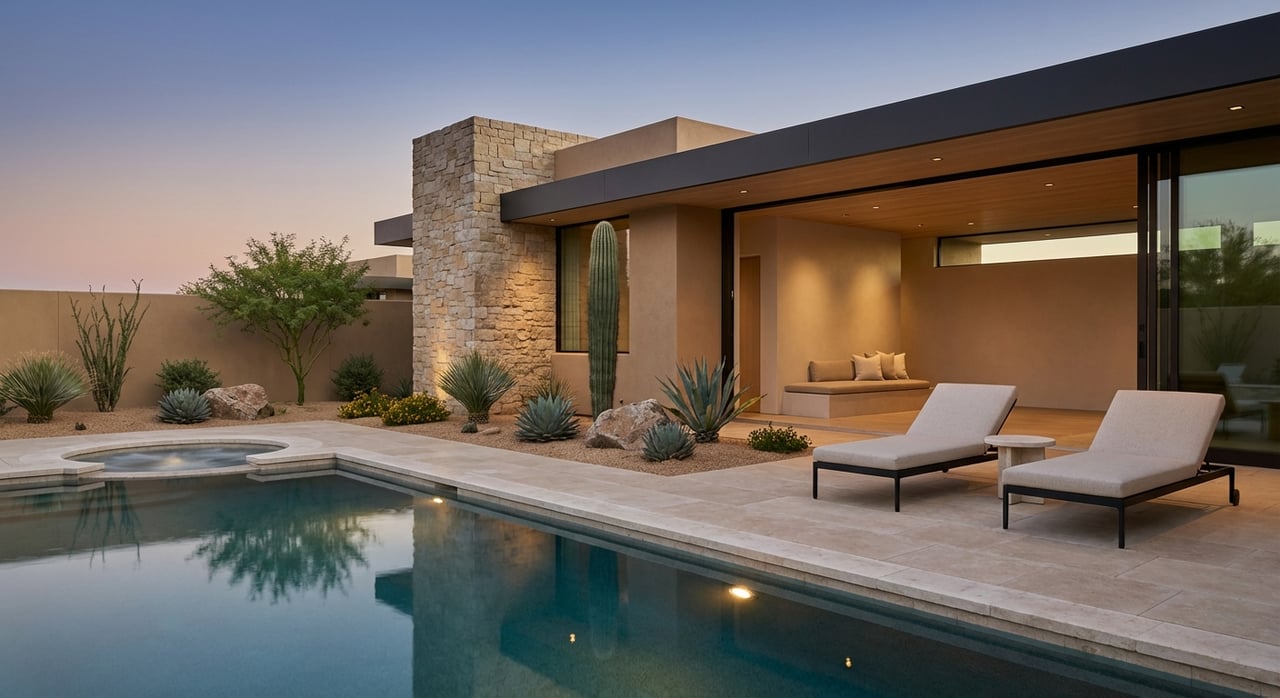
Love the clean lines, warm stone, and wide glass that define a modern desert home? Paradise Valley gives you the perfect canvas. The light is dramatic, the views are big, and the climate asks you to design with intention. In this guide, you’ll learn what makes desert modern work here, how the Town’s rules shape your options, and smart moves for comfort, cost, and resale value. Let’s dive in.
What desert modern looks like in Paradise Valley
Low, horizontal forms
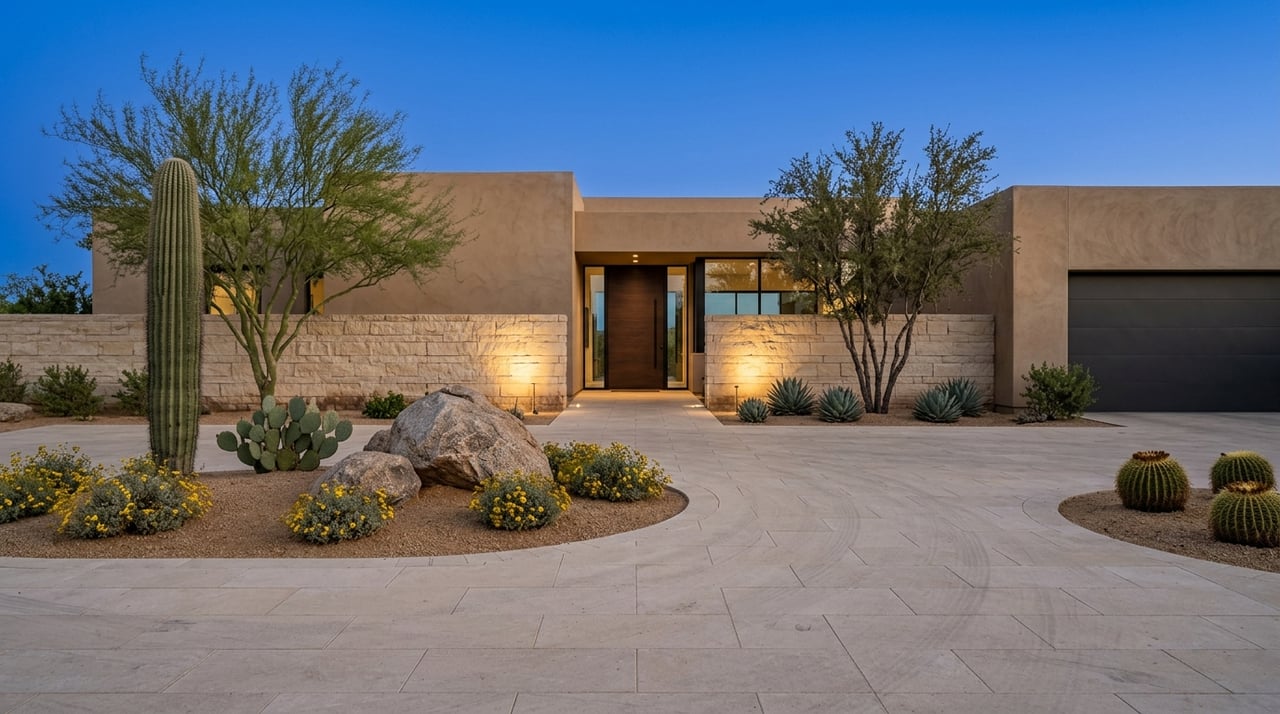
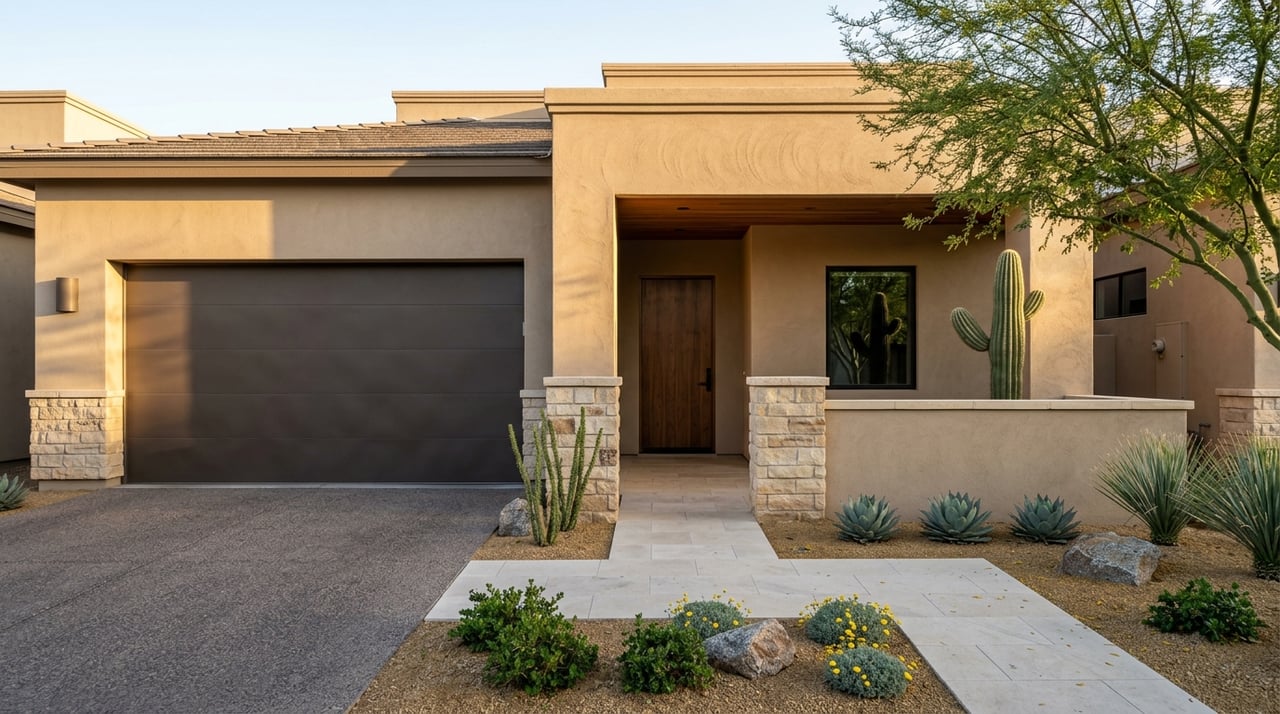
Paradise Valley’s best desert modern homes sit low to the land. They use linked pavilions or stepped volumes that follow natural grade. Shallow roof planes create deep shade and long horizontal lines that frame distant desert and mountain views. Local precedents, like the “Dancing Light” residence, show how this approach feels calm and connected to place. You can see these moves in action in the published example of Dancing Light by Kendle Design Collaborative.
Natural, durable materials
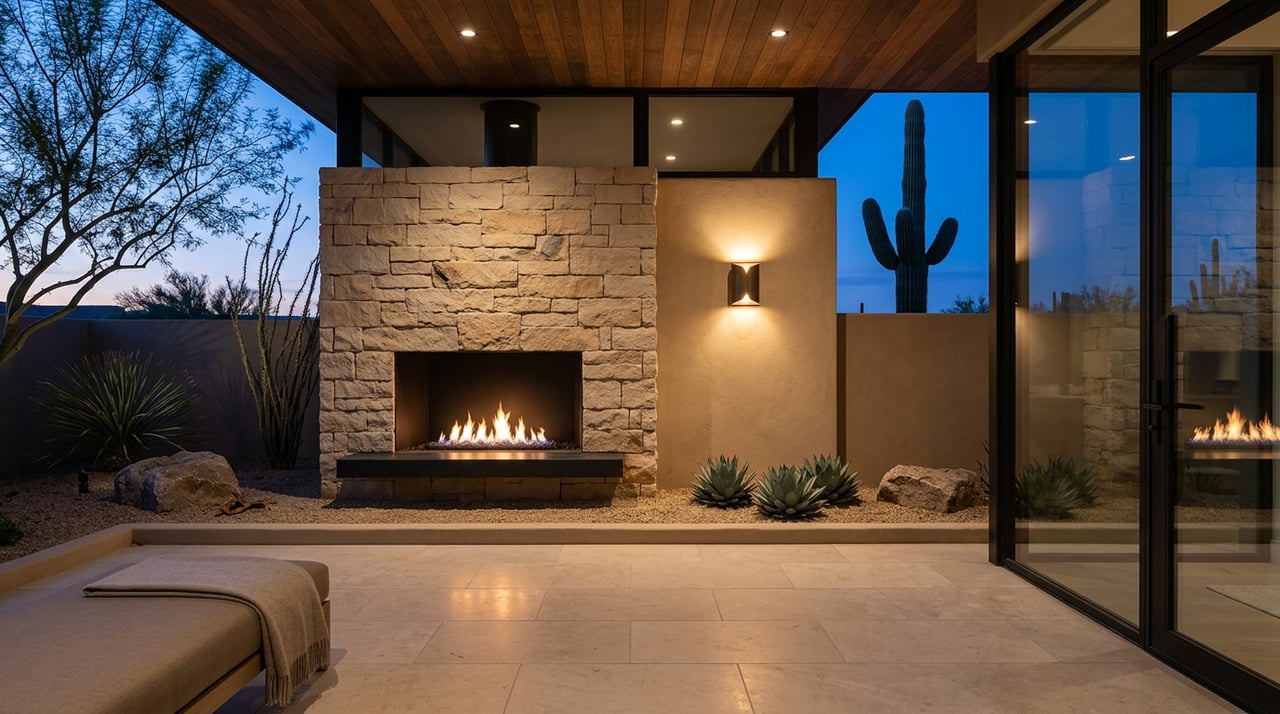
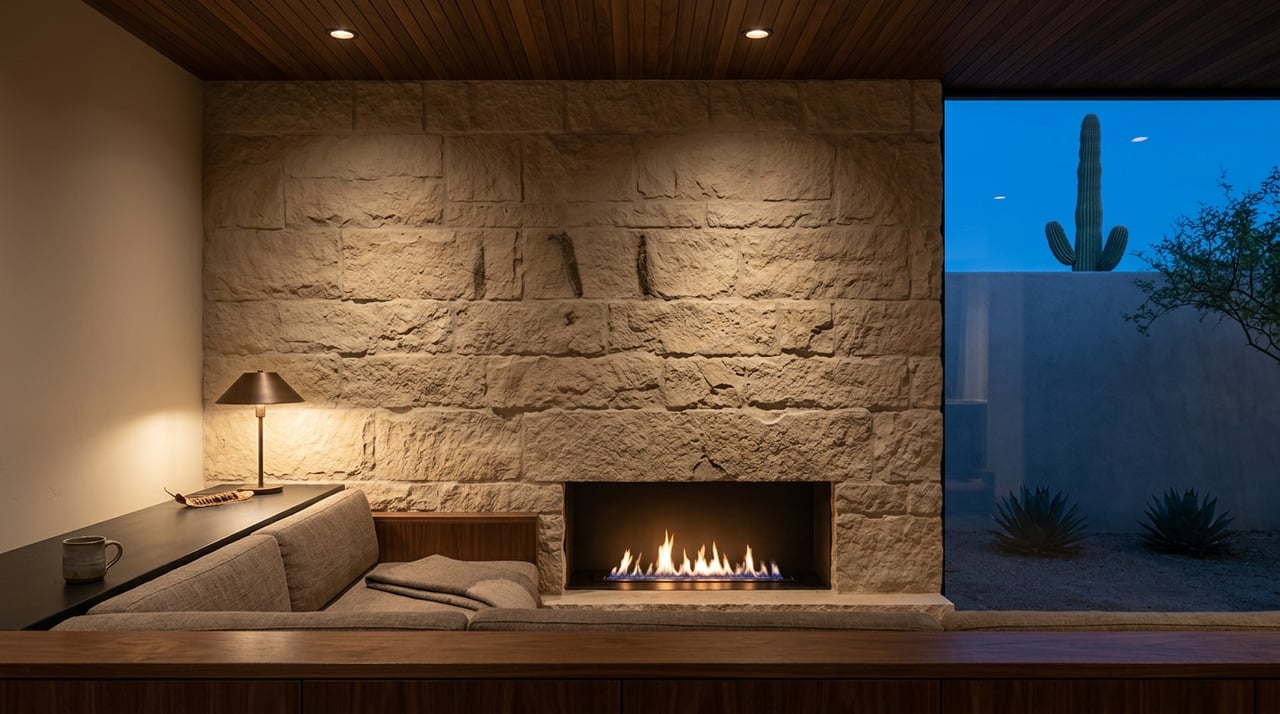
You often see stone, integrally colored stucco or plaster, board-formed concrete, warm woods, and sculptural steel used with restraint. The palette skews to sand, bone, and ochre, sometimes paired with darker metal or basalt accents for contrast. These choices are not just aesthetic. They also stand up to sun, heat, and daily temperature swings.
Indoor-outdoor continuity and view framing
Desert modern blurs thresholds. Stacking glass walls, covered loggias, and courtyard plans let you move easily between cool interiors and shaded outdoor rooms. Inside, windows are sized and placed to frame specific views. Narrow slots and long sightlines can create drama while controlling sun and glare.
Design for the Sonoran climate
Paradise Valley sits in a hot desert climate with long, very hot summers and low annual rainfall. Phoenix-area climate normals show mean annual temperatures in the mid 70s and about 7 inches of yearly precipitation, so solar control and durable finishes matter from day one. See regional data from the National Weather Service’s 1991–2020 climate normals.
Smart, passive-first strategies help your home stay comfortable while looking beautiful. Proven moves include the following:
- Shade smart: use deep roof overhangs, louvers, and fins to block high summer sun while admitting softer light.
- Face the right way: prioritize north-facing glass for balanced daylight and limit big east and west windows that take hard morning or afternoon sun.
- Use thermal mass: concrete or rammed earth can store heat and help with night cooling where appropriate.
- Choose high-performance glass: specify low solar heat gain coatings and size openings deliberately.
- Ventilate and zone: plan for night purge strategies and high-efficiency, zoned HVAC to fine-tune comfort.
For a deeper look at performance-first design moves in hot-dry climates, review these desert design strategies.
Landscape and outdoor rooms that work
A water-wise landscape is both beautiful and practical here. Paradise Valley encourages conservation, xeriscaping, and hydrozoning, with native and low-water species like palo verde, mesquite, ironwood, agaves, ocotillo, brittlebush, and desert marigold. Explore the Town’s water conservation guidance as you plan.
Pools and water features remain favorite focal points. To make them usable longer, pair them with shaded terraces, pergolas or ramadas, and light-colored decking that stays cooler underfoot. Arrange seating and circulation to catch breezes and avoid heat traps. When done well, a pool court can feel like a resort courtyard while still respecting the desert setting.
Permits and hillside rules in Paradise Valley
Paradise Valley’s process is digital and clear once you know what to expect. Plan types and checklists vary by scope, and submittals run through the Town’s online portal. Start by reviewing the Town’s permit page for current requirements and electronic submittal steps at Paradise Valley Permits.
Common documents for a custom home or major remodel include:
- Site plan and architectural drawings
- Grading and drainage plan
- Dust control plan
- Native plant preservation documentation
- Material samples or boards
- HOA acknowledgment when applicable
Paradise Valley also adopts specific International Code editions and local amendments for reviews. Designers confirm current adopted editions with the Town before preparing construction documents.
For hillside lots
If your property is on a mapped hillside or has slopes of 10 percent or greater, Article XXII applies. The ordinance aims to protect ridge lines, limit grading scars, require revegetation, and preserve open visual space. Expect a pre-application, concept review, and a formal Hillside Building Committee process. Review the Town’s Hillside Development Regulations to understand disturbed area limits, submittal needs, and how design choices like rooflines and lighting are evaluated.
Work with the right team
Bring on an architect early to test site orientation, view corridors, and feasibility before you set your program or invest heavily in engineering. The AIA outlines what architects do and common engagement models. It is a helpful primer if you have not worked with one before. Start here: How to work with an architect.
When you hire a builder, verify they hold an active Arizona ROC license and carry proper insurance and bonding. Experienced Paradise Valley contractors will know the Town’s submittals, inspection cadence, and hillside practices. You can learn more about Arizona contractor licensing and lookups from this overview of ROC licensing.
As your real estate advisor, VANDI HOUSE can help you source sites, vet design and build teams, and structure timelines around entitlement realities. You get boutique guidance paired with market reach when it is time to market or acquire a finished home.
Budget and timeline signals
Luxury custom pricing in the Phoenix and Paradise Valley market spans a wide range based on site complexity and finish level. Local references often cite roughly 300 to 1,000-plus dollars per square foot for high-end custom homes. Expect the lower end only for straightforward builds with quality finishes, and the top of the range for ultra-custom estates, intricate stonework, engineered canopies, or heavy hillside grading. See a helpful local summary of custom home cost factors.
Timelines vary by scope and approvals. As a general frame, plan for several months of design, plus permit and entitlement time, then 9 to 18 months or more for construction on larger custom homes. Hillside reviews can add steps and months, and seasonal material lead times can affect schedules. Confirm specifics early with your architect and GC. For a high-level view of regional custom-build pacing, review this timeline overview.
Buyer and seller takeaways
If you are buying, focus on homes with good orientation, deep shade, and indoor-outdoor flow. Look for material palettes that age well in heat and sun, mechanical systems with zoned control, and landscapes that balance beauty and water use.
If you are selling, small upgrades can go far. Thoughtful lighting, refreshed outdoor shade, and updated glazing or sun-control details can improve both comfort and presentation. High-quality photography and video that showcase view framing and outdoor rooms will help buyers picture the lifestyle.
Modern desert checklist
Use this quick list to guide your search or your remodel plan:
- Architecture: low, horizontal massing with deep overhangs and shaded entries.
- Glazing: north-facing glass where possible, limited west exposure, and high-performance coatings.
- Courtyards: central or side courtyards that buffer wind and create cool, calm outdoor rooms.
- Materials: stone, integrally colored stucco or plaster, board-formed concrete, warm timber, and sculptural steel details.
- Landscape: native and low-water species grouped by hydrozone, preserved mature specimens when feasible.
- Hardscape: light-toned pavers and decks that stay cooler, with clear circulation and breeze paths.
- Systems: efficient, zoned HVAC and controls sized to the envelope, with a plan for maintenance in hot months.
Ready to explore your options
Whether you are scouting land for a custom build, eyeing a modern desert resale, or considering a high-impact remodel, you deserve guidance tailored to Paradise Valley. With construction and finance expertise plus Sotheby’s global reach, you get a calm, competent partner from site selection to closing. Connect with Stacey Vandivert to book an appointment and start a focused plan for your goals.
FAQs
What defines modern desert design in Paradise Valley homes?
- Low, horizontal forms with deep shade, durable natural materials, and glass placed to frame views while managing sun and heat in a hot-dry climate.
How do Hillside regulations affect my custom home?
- If your lot is on a mapped hillside or slopes exceed 10 percent, you will have extra reviews, limits on disturbed area, and revegetation requirements. Early pre-application and concept review help set a smooth path.
What passive strategies lower heat gain and energy use?
- Deep overhangs, careful window orientation, high-performance glazing, and thermal mass where appropriate, paired with efficient, zoned HVAC and controlled ventilation.
What plants work for a water-wise desert landscape?
- Native and low-water species like palo verde, mesquite, ironwood, agaves, ocotillo, brittlebush, and desert marigold, grouped by similar water needs.
How long does a custom build typically take in Paradise Valley?
- Plan for several months of design and permits, then about 9 to 18 months or more for construction depending on scope, site complexity, and reviews.