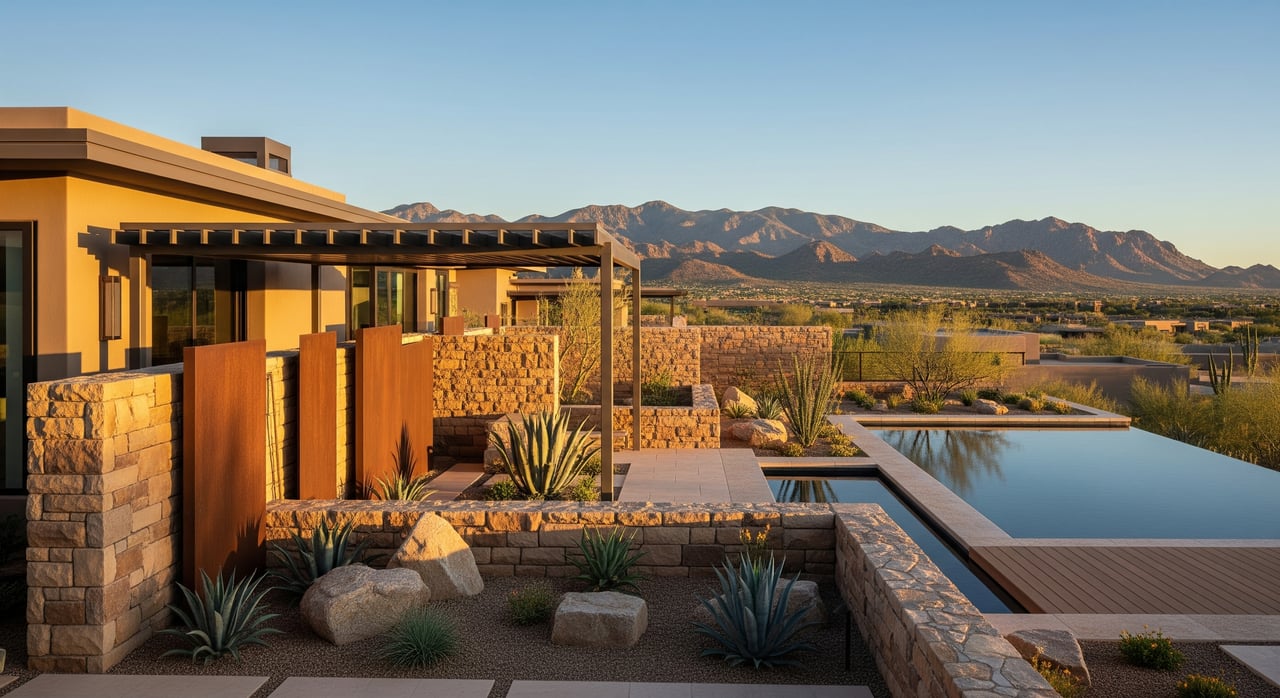
Is the perfect Desert Mountain lot the one with glowing sunsets, or the one that stays cool on July afternoons? If you are weighing view drama against day-to-day comfort, you are not alone. In this community, the way a lot faces shapes how you live, what it costs to run your home, and how your property performs on resale. This guide gives you a clear, practical way to compare lots by sun, views, and privacy so you can buy with confidence. Let’s dive in.
Why orientation matters in Desert Mountain
Desert Mountain sits in the McDowell foothills of North Scottsdale, not on the valley floor. Elevations here are often 1,000 to 1,800 feet higher than central Scottsdale, which typically means a few degrees cooler on average. That difference affects evening comfort, outdoor living, and even plant selection.
The community uses a design review process and CC&Rs that influence how a home sits on a lot. Building envelopes, setbacks, retaining walls, lighting, and landscape rules can shape your options for patios and window placement. Many homes are within villages that may add specific guidelines, so get those documents early in your search.
Permitting runs through Maricopa County for unincorporated parcels. Utility easements, sewer or septic plans, and water service can all affect where you can build, which in turn affects how you can orient your home.
Sun and comfort: how desert light works
In the Sonoran Desert, the sun climbs high in summer and sits lower in winter. Long summer days deliver intense overhead light, while winter sun angles are lower and produce longer shadows at sunrise and sunset. Solar resource is excellent here, which is helpful for both passive comfort strategies and solar power.
West-facing glass drives the most late-afternoon heat gain in summer. Keep large west windows to a minimum or design deep shading for them. In contrast, north-facing living areas often feel calmer and cooler because they avoid direct sun while still getting bright, diffuse light.
South-facing roof planes are prime real estate for solar panels. If a ridgeline, neighboring home, or tall vegetation shades that roof in winter, your PV performance can drop. Evaluate solar access at the winter solstice, which is the worst case for shade.
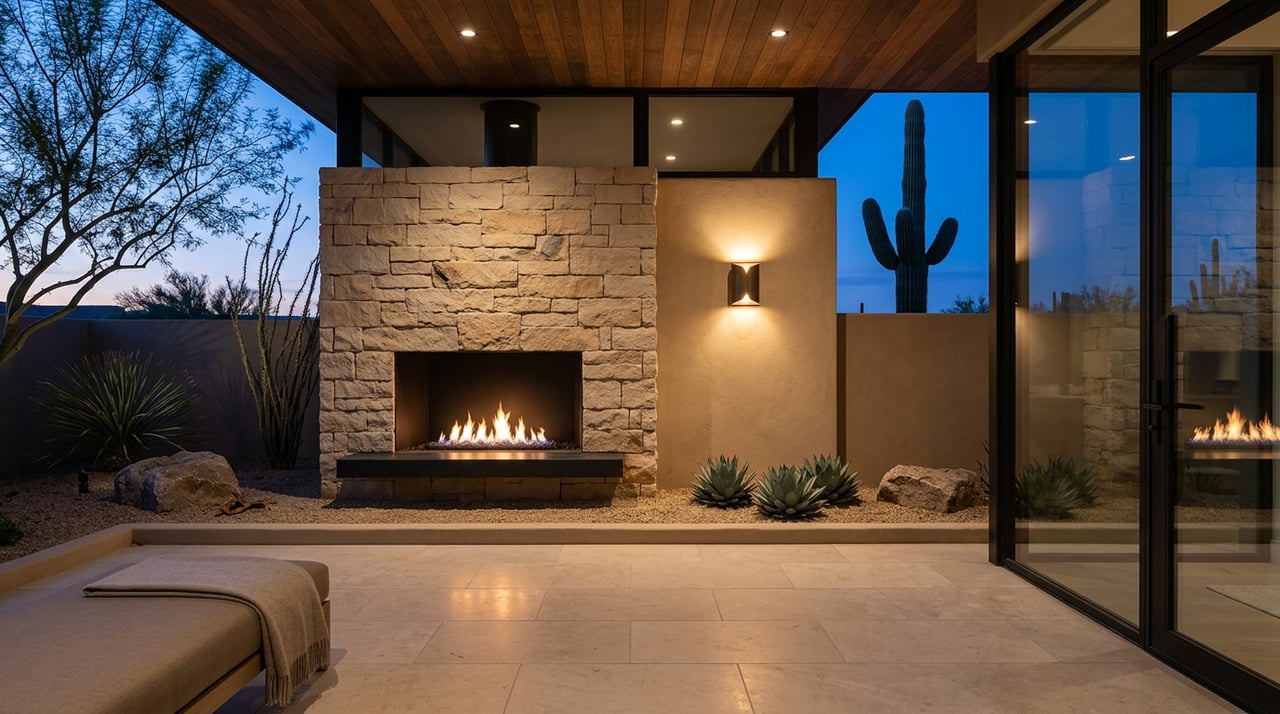
Outdoor living benefits from orientation too. Covered patios that face north or east usually stay comfortable longer on hot days. West or southwest patios catch striking sunsets but need thoughtful shade, cooling strategies, and materials to handle summer heat.
Quick rules of thumb
- Limit large west-facing glazing and add deep overhangs where you have it.
- Favor north and east exposures for primary living areas.
- Reserve unshaded south roof planes for PV and confirm winter solar access.
- Plan shaded outdoor rooms and courtyards for afternoon protection.
Views and resale: what holds value
Buyers in Desert Mountain often prize mountain vistas for their permanence and serenity. Many also seek wide valley or city-light views to the south and southwest. Golf course corridors offer manicured, predictable scenery and can command premiums, while lots backing to preserved desert or washes can feel more private and natural.
View permanence matters as much as view quality. Neighboring buildable parcels, accessory structures, or golf course changes can shift a sightline. Trees can also grow into your view over time. Views over protected open space tend to be more stable.
There is a tradeoff between view and comfort. Southwest orientations that capture sunsets can also invite afternoon heat. Many Desert Mountain buyers still choose the view and solve the comfort side with shading, high-performance glazing, and mechanical design.
How to rate a view’s staying power
- Identify if your sightline crosses protected open space or buildable lots.
- Check village maps for undeveloped parcels that could change your view.
- Weigh the breadth of the panorama versus a narrow framed vista.
- Consider whether the desired view forces uncomfortable sun exposure.
- Review recent local comps to see which view types command premiums.
Privacy, topography, drainage and build complexity
Slope is common in the foothills and can be a double-edged sword. Steeper lots often deliver elevated views and more privacy. They can also raise costs for grading, retaining walls, foundations, and driveways. A civil or site engineer can help you budget these items before you commit.
Natural washes and ephemeral arroyos are part of desert terrain. Lots that touch a wash may have setback requirements and need engineered drainage solutions. Getting water to flow correctly on and off your site is essential for long-term performance and neighbor relations.
Foothill vegetation can increase wildfire exposure. Community guidelines and codes may require defensible space and smart material choices. Privacy can be created with elevation, native landscaping, and berms without blocking views or solar access.
A 5-step lot evaluation for Desert Mountain buyers
Use this simple framework to compare candidate lots apples to apples.
- Map the sun and primary exposures
- Walk the lot morning, midday, and late afternoon. Note where heat, glare, and shadows show up.
- If solar is a priority, ask for a solar access or shadow study for both solstices.
- Evaluate view permanence and quality
- Classify views: mountain, valley or city, golf corridor, or preserved desert.
- Identify whether the sightline crosses open space or buildable parcels. Look for potential obstructions like maturing trees or future fill.
- Assess privacy and activity conflicts
- Check proximity to fairways, cart paths, roads, and neighbors’ outdoor spaces.
- Confirm community rules for accessory structures that might change privacy.
- Consider energy and comfort tradeoffs
- If the view pulls you southwest, plan for shading, glazing upgrades, and cooling capacity. For PV, confirm unshaded south roof area and evaluate winter shading.
- Ask a solar installer to model production based on roof geometry and local shading.
- Check legal and technical constraints
- Obtain the design review packet and CC&Rs. Confirm building envelope, setbacks, and lighting or landscape rules for your village.
- Verify easements, wash or floodplain conditions, and utility routes with Maricopa County. Get preliminary input on retaining walls, driveway grades, and drainage.
On-site quick checklist
- Visit at sunrise, mid-afternoon, and sunset to observe sun, heat, and shadow patterns.
- Stand where living areas and the main patio might go and test the view and privacy.
- Identify neighbors’ grades, rooflines, and likely future building pads.
- Look for an unshaded south roof plane for PV and check for winter shading from ridgelines.
- Ask for recent comps that show how orientation and view impacted sale prices.
Solar potential and roof planning
Desert Mountain has excellent solar resource, but performance depends on shade and roof orientation. South-facing, unshaded roof planes typically deliver the best yield. East and west roofs can still work with proper sizing, although output changes.
Topography and neighbors can cast long winter shadows. Even if summer looks wide open, evaluate solar access at the winter solstice. Plan conduit routes and equipment placement early so design review and aesthetics align with performance.
Common scenarios and how to solve them
Southwest city-light view lot. You get spectacular sunsets and strong resale appeal. To handle heat, use deep patio overhangs and trellises, specify high-performance glazing, add exterior shading, and consider a reflective roof. A well-sized PV system can help offset cooling loads.
North-facing hillside with mountain vistas. You enjoy soft, even light and cooler interiors. To warm up winter days, balance in controlled south sun using clerestories or courtyards, and capture prevailing breezes for nighttime cooling.
Golf course frontage with activity nearby. You have manicured views and convenience, but less privacy. Create separation with terraced landscaping, privacy walls allowed by guidelines, and patio placement that angles away from play.
What to line up before you write an offer
Gather the village-specific design guidelines, the building envelope map, and the master CC&Rs. Confirm utility service and easements, and request any topographic surveys on file. If a wash is present or nearby, review floodplain and setback notes with Maricopa County.
Commission a basic solar access and shading review if PV is important. Ask a site engineer to give preliminary budgets for grading, retaining walls, driveway slope, and drainage. Finally, study recent Desert Mountain comps that isolate view type and orientation premiums to support your pricing decision.
Work with a local advisor who blends design, land, and finance
The best outcomes come from aligning lifestyle goals with smart site selection. You want an advocate who knows Desert Mountain’s design review, reads building envelopes, understands slope and drainage costs, and can quantify solar and comfort tradeoffs. You also want premium marketing if you plan to resell.
At VANDI HOUSE, you get a boutique, high-touch experience backed by global reach. With a CPA background and experience in land acquisition, construction, and finance, we help you evaluate lots clearly, design smarter, and position your property for resale. Ready to walk lots and compare your options with a clear plan? Book an appointment with Stacey Vandivert.
FAQs
How Desert Mountain elevation affects comfort
- Lots are typically 1,000 to 1,800 feet above the valley, which usually means a few degrees cooler on average that can improve evening comfort and outdoor living.
West-facing windows in the Sonoran Desert
- Large west-facing glazing produces strong late-afternoon heat gain in summer, so minimize it or add deep shading to cut cooling loads.
Permanence of mountain and city-light views
- Views that cross protected open space are generally more stable, while sightlines over buildable parcels are more likely to change as neighbors develop.
Solar panels and roof orientation in Desert Mountain
- South-facing, unshaded roof planes usually deliver the best PV output, and winter shading from ridgelines or neighbors should be checked at the solstice.
Costs tied to sloped Desert Mountain lots
- Steeper sites often require more grading, retaining walls, and engineered foundations, which increase build costs even as they may enhance views and privacy.